I've spent more than ten years sourcing products in China: sitting in factory offices in Dongguan, walking wholesale markets with clients, and unpacking inspection failures at 11pm so a container wouldn't ship with the wrong goods inside. This guide is everything I'd want a buyer to know before they hire someone like me, or decide not to.
It covers what a sourcing agent actually does, what one costs, how to tell a real agent from a disguised reseller, how the process works step by step, and where things go wrong. It's long on purpose. Bookmark it, skip to the part you need, and if a question isn't answered here, it's probably in the FAQ.
What is a China sourcing agent?
A China sourcing agent is a person or small team on the ground in China who works on your behalf: finding factories that can make your product, verifying those factories are real, negotiating prices, managing samples, inspecting the goods before they ship, and coordinating freight to your door.
The key phrase is on your behalf. A genuine agent is paid by you, with a fee you can see, and shows you the factory's real price. That single detail separates an agent from every other player in this industry, and most of this guide comes back to it in one way or another.
The one-sentence definition: a sourcing agent is your employee in China for the duration of a project. If the person you're talking to doesn't behave like your employee, whatever their title says, they're something else.
What a sourcing agent actually does
The job looks simple from the outside: "find me a factory." In practice a full-service agent handles a chain of tasks, and the value is that each one catches problems the previous one missed.
- Supplier research. Turning your product spec into a shortlist of factories that genuinely manufacture that product, not trading companies with nice catalogues. This usually means 3 to 5 vetted options with quotes in 3 to 5 business days.
- Factory verification. Checking the business licence matches the company you'd be paying, visiting the site, counting workers and machines, and confirming certifications with the labs that issued them. Forged certificates are common. I've caught them more than once.
- Price negotiation. Knowing what a product should cost at a given quality tier, and negotiating in Chinese with the cultural context that changes what factories will say and offer.
- Sample management. Coordinating prototypes, photographing and measuring them, and sealing a "golden sample" that production will be judged against. There's a full guide on this: how to order samples from Chinese suppliers.
- Production oversight. Tracking the order while it's being made, so a three-week delay doesn't surprise you in week four.
- Pre-shipment inspection. Physically checking the finished goods against the golden sample before you pay your balance. This is the single most important step in the entire chain, and it's the one bad agents skip.
- Shipping and logistics. Booking sea or air freight, preparing export documents, and tracking the shipment to your warehouse.
Some buyers need all of this. Others already have a supplier and only want inspection or logistics support. Both are normal ways to work with an agent.
Sourcing agent vs trading company vs middleman
This is where most buyers get burned, so let me draw the lines clearly. Three different businesses often use the same job title.
The sourcing agent
Works for you. Charges a visible fee. You pay the factory directly, you see the factory invoice, and you can contact or visit the factory whenever you like. If the agent disappeared tomorrow, you'd still own the supplier relationship.
The trading company
Buys from factories and resells to you. The markup is their margin, so you never see the real factory cost, and the factory relationship belongs to them, not you. Trading companies aren't automatically bad. For small orders across many products, a good one can be efficient. But many present themselves as manufacturers or as "agents," and the difference matters when there's a quality problem and you discover you have no idea who actually made your goods.
The middleman
The worst of both. Adds a hidden markup like a trading company, but takes none of the responsibility: no inspection, no quality accountability, no real service. Their business depends entirely on you never seeing the real number. I wrote a full breakdown of how to spot one in how to choose a reliable China sourcing agent.
The fastest test: ask to see the factory's own quotation. An agent shows it and adds their fee on top where you can read both numbers. A trading company or middleman gives you one "all-in" price and won't break it down. That single request sorts the industry into two piles in about a minute.
Do you actually need one?
Honest answer: it depends on your size, and a good agent will tell you when the answer is no.
You probably don't need an agent if you're a large importer with your own staff in China, established supplier relationships, and the volume to command a factory's attention directly. You have the leverage. Use it.
You probably do need one if you're a small or mid-size buyer, an Amazon seller, or a brand placing its first orders. The hidden costs of going direct add up fast: verifying a factory is real, reading an inspection report, negotiating minimums and payment terms in Chinese, arranging freight. Any one mistake on a first order tends to cost more than a year of agent fees.
A simple self-test. If you can confidently verify a Chinese business licence, catch a forged CE certificate, and negotiate a 30/70 payment structure in Mandarin, you may not need help. If any of that makes you uneasy, an agent isn't a markup layer. It's insurance with a person attached.
What a sourcing agent costs
Two standard models, sometimes mixed:
- Commission: usually 5 to 10 percent of the order value, lower on large orders. Charged on the real factory price, which you can see.
- Flat service fee: a fixed amount per project, quoted upfront, independent of the product price. Common for sourcing-and-shortlist work.
Inspections are often billed separately as a fixed fee per visit. Factory visits and trip support are usually day rates.
Here's the part that matters more than the number: the structure. A 5 percent commission on a real factory price is honest. A "free" agent whose income is buried in the product price is not free, and you'll never know what they cost you. Always ask for the factory cost and the fee as two separate lines. If an agent saves you 15 percent by finding a better factory and catches one bad batch before it ships, the fee pays for itself several times over. The cheapest agent is rarely the lowest total cost.
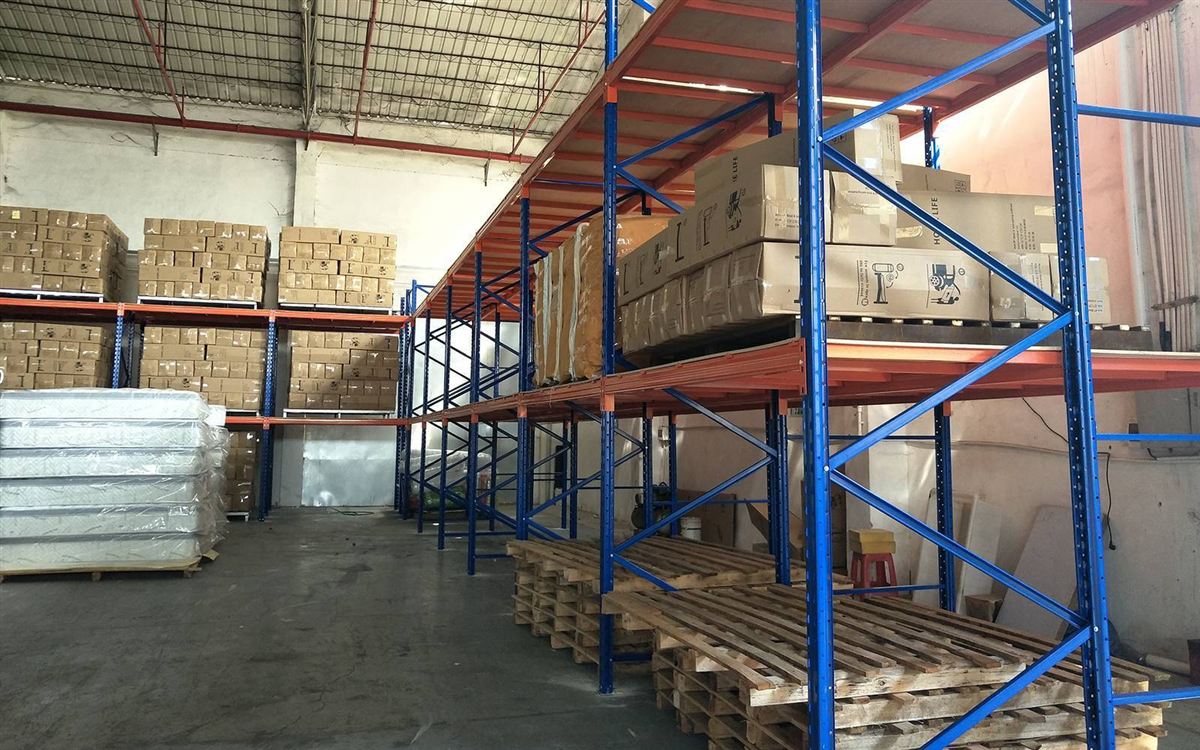
A supplier verification visit. The licence check takes minutes; the warehouse tells you the rest.
The process, step by step
Here's what actually happens when you work with an agent, with realistic timelines. Every project is a little different, but the shape is always this.
Step 1: The brief (day 0)
You describe the product: specs, materials, target price, quantity, destination market. A rough idea works. The agent's first job is turning it into a proper sourcing brief and telling you honestly whether your target price is achievable. Sometimes it isn't, and hearing that on day 0 is a gift.
Step 2: Supplier shortlist (days 3 to 5)
You receive a shortlist of vetted factories with quotes, certifications, and a recommendation. Not fifty Alibaba links. Three to five real options with reasons.
Step 3: Samples (days 7 to 28)
Sample production takes 7 to 21 days depending on complexity. The agent receives samples, photographs and measures them, and forwards them to you. When you approve one, it gets sealed as the golden sample: the physical benchmark production will be judged against.
Step 4: Order and deposit (day 30, give or take)
Standard terms in China are 30 percent deposit before production, 70 percent balance before shipment. Pay the factory's company account directly, never a personal account, and put the terms in writing. The full details are in China payment terms explained.
Step 5: Production (25 to 45 days for catalogue items, 45 to 75 for custom)
The agent tracks progress and flags delays early. This is quiet work, and it's why the loud failures happen to buyers who had nobody watching.
Step 6: Pre-shipment inspection (before the balance payment)
The finished goods get checked against the golden sample: workmanship, quantity, packaging, function tests. You see photos and video. Only when the inspection passes do you release the remaining 70 percent. If it fails, the factory fixes the problems while your money is still your leverage. Never let anyone talk you into paying the balance before this step.
Step 7: Shipping (sea: 25 to 40 days; air: 5 to 8 days)
Sea freight runs roughly 25 to 35 days to Europe and 30 to 40 to the US East Coast. Air is 4 to 6 times the cost. For most orders, budget 10 to 14 weeks from deposit to delivery, and read the five most common importing mistakes before your first one.
Where things are actually made: China's regional clusters
China isn't one factory. It's hundreds of specialized city-level clusters, and an agent who works inside your product's cluster is worth several who don't. This is where I'd start for the four categories I know best:
- Furniture: Dongguan and Foshan, in the Pearl River Delta. Sofas, beds, dining sets, outdoor pieces. See sourcing furniture from China.
- Electronics: Shenzhen and the surrounding belt. Consumer electronics, smart home, accessories, always with CE/FCC/RoHS certificates verified against the issuing labs. See sourcing electronics from China.
- Clothing and apparel: Guangzhou and the delta's garment towns. OEM garments, private label, sportswear. See sourcing clothing from China.
- Home textiles and bedding: Nantong, near Shanghai, which produces a huge share of the world's bedding. GSM, fill weight, and thread count are where quality games get played. See sourcing home textiles from China.
If you're choosing between manufacturing cities for a product that could be made in several, the comparison in Dongguan vs Shenzhen shows how I think about the trade-offs.
How to choose a reliable agent
The short version of the checks I'd run before hiring anyone, myself included:
- Ask how they make their money. A fee you can see, or a margin you can't?
- Ask to see the factory's real quotation with the fee added on top.
- Test their specialization with a technical question about your product.
- Confirm inspection happens before the balance payment, with photos.
- Check they'll let you contact and visit the factory.
- Verify they're a findable business: website, registration, LinkedIn, reviews.
- Ask for a reference, and judge how they communicate at the quoting stage.
Each of these has a longer explanation, with the reasoning, in the dedicated guide: How to choose a reliable China sourcing agent (7 checks before you pay). For the supplier side of the same problem, see how to find a reliable supplier in China.
Red flags, all in one place
- One vague "all-in" price with no breakdown between factory cost and fee.
- Refuses to let you contact or visit the factory.
- No inspection step before the balance payment.
- Pressure to pay fast, into a personal account instead of a company account.
- No verifiable identity: no website, no registration, no reviews, no LinkedIn.
- Only accepts untraceable payment methods like Western Union.
- Never says no. A partner who agrees to every price, every deadline, and every spec is telling you what you want to hear, not what will happen.
Any one of these is a reason to slow down. Two or more, and I'd walk.
Sourcing from China?
Want a second opinion before you commit?
Send me your product idea, or the quote and supplier you're already talking to. I'll tell you honestly whether the price is realistic, whether the setup looks safe, and whether you even need an agent for it. First consultation is free.
Chat on WhatsApp →How I work, so you can compare
I run Abel Sourcing from Dongguan. Clients pay a clear service fee or an agreed commission on the real factory price, which they see on the factory's own invoice. Payment for goods goes directly from the buyer to the factory. Every order is inspected before the balance is released, with photos and video. And clients are welcome to visit the factories with me, or without me.
You can read verified client reviews on the testimonials page and on Trustpilot, where the rating is currently 5.0. If what you've read in this guide matches how you want to work, tell me about your project and I'll reply within 24 hours.
Quick answers
What is a China sourcing agent?
Someone on the ground in China who works for you: finding and verifying factories, negotiating prices, managing samples and inspections, and coordinating shipping, for a fee you can see.
How much does one charge?
Typically 5 to 10 percent commission on the real factory price, or a flat project fee agreed upfront. Inspections are usually a separate fixed fee.
Is it worth it for a small business?
Usually, yes. The fee tends to be smaller than the cost of one bad supplier or one failed batch, which is exactly what an agent exists to prevent on your first orders.
Agent or trading company, which should I use?
If you want to own your supplier relationship and see real costs, use an agent. If you're placing small mixed orders and don't mind paying an invisible margin for convenience, a good trading company can work. Just make sure you know which one you're dealing with.