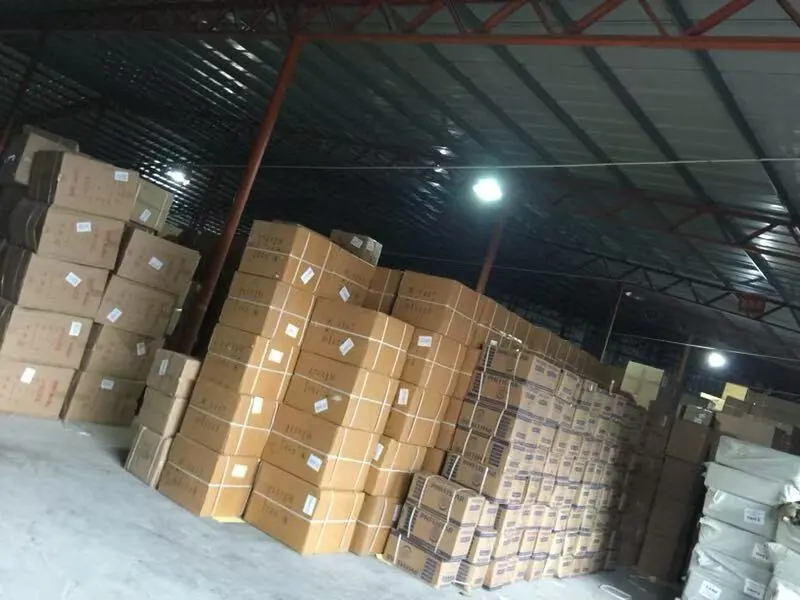
Finding a factory is only half of a China sourcing project. The goods still have to leave several supplier locations, reach one warehouse or port, pass a final check, match the shipping documents, clear export procedures, and arrive at your warehouse without a surprise charge or missing carton.
This is where a sourcing agent should connect purchasing with logistics. The agent does not need to own a freight company. The useful work is controlling the handoff: making sure the right goods, cartons, labels, quantities, documents, and freight instructions all describe the same shipment before it leaves China.
Quick answer: a China sourcing agent should coordinate factory pickup, warehouse receiving, multi-supplier consolidation, carton and quantity checks, export-ready packaging, freight comparisons, shipping documents, loading supervision, and shipment tracking. The buyer, agent, and forwarder must also agree in writing who is the importer of record and who pays duties, VAT, brokerage, insurance, and destination charges. "Door to door" alone does not answer those questions.
What a Sourcing Agent Should Handle Before Shipping
1. Build one shipment plan across all suppliers
When an order uses two or more factories, every supplier normally has a different finish date, carton size, warehouse location, and domestic delivery cost. The agent should collect the final packing data from every supplier and create one shipment plan: product, quantity, carton count, gross and net weight, carton dimensions, ready date, pickup address, and any dangerous-goods or battery status.
This matters because a freight quote based on estimated product weight can change after packing. Air and express services often charge by the greater of actual and dimensional weight. Sea LCL quotes depend on volume, while FCL planning depends on whether the cartons can use container space efficiently.
2. Receive and consolidate goods in China
A consolidation warehouse gives the buyer one controlled point between several factories and the international carrier. The agent should receive each delivery, record carton counts, photograph damage, flag shortages, and keep each supplier's goods separated until they are checked.
Consolidation can reduce duplicated pickup, export, and destination charges. But it only saves money if the warehouse records are accurate. A cheap combined shipment is not useful when one factory's cartons are missing or mixed with another order.
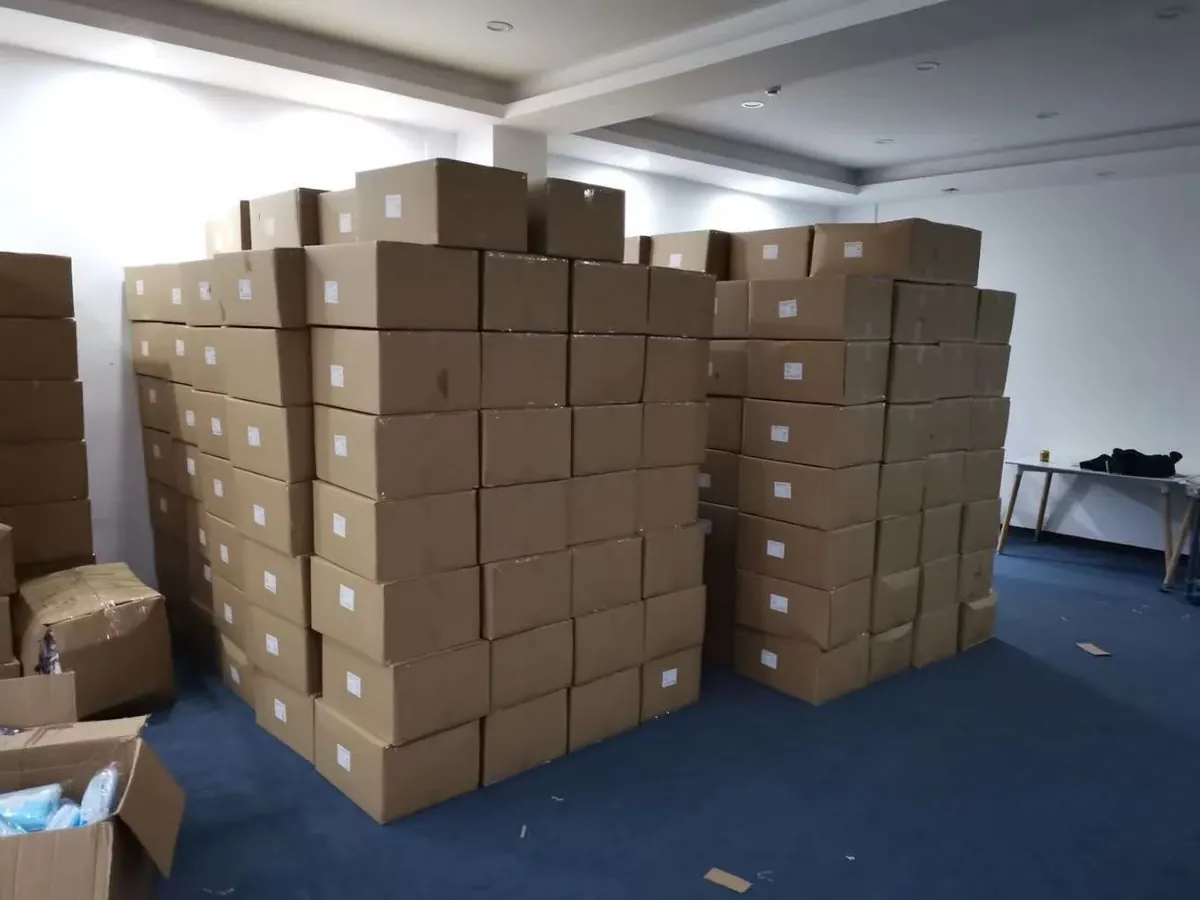
Cartons grouped in a China warehouse before export. Each supplier delivery should be counted and recorded before the combined shipment is released.
3. Inspect before the freight forwarder collects
Shipping is not the moment to discover a quality problem. The product inspection should happen before the balance payment and before the cartons leave the supplier's control. The release decision should cover product quality, quantity, packaging, shipping marks, barcode or label placement, accessories, manuals, and any country-specific warning labels.
Loading supervision is a second control. It confirms that the passed cartons are the cartons handed to the forwarder, records the container or vehicle number when relevant, and documents visible damage or poor loading. These are different checks: product inspection proves what passed; loading supervision proves what left.
4. Compare freight options using the packed cargo data
A useful comparison shows more than one headline price. It should state the route, mode, chargeable weight or cubic metres, Incoterm, origin charges, main freight, destination charges, customs brokerage, estimated transit window, free time, insurance, pickup and final delivery, plus every exclusion.
The lowest base rate is often not the lowest landed freight cost. One quote may exclude terminal handling, customs entry, residential delivery, lift-gate service, remote-area fees, or duties and VAT. Ask the agent to normalize quotes into the same scope before choosing.
Express, Air, Rail, LCL, or FCL?
| Mode | Usually fits | Main watch-out |
|---|---|---|
| Express courier | Samples, documents, small urgent parcels | Dimensional weight, remote-area and brokerage charges |
| Air freight | Time-sensitive commercial cargo too large for courier | Airport handling and last-mile delivery may be separate |
| Rail to Europe | Selected inland European routes when sea is too slow and air too costly | Route availability, border transfers, schedule variability |
| Sea LCL | Smaller, non-urgent shipments that cannot fill a container | Consolidation time and destination deconsolidation fees |
| Sea FCL | Larger orders that can use most of a 20 ft or 40 ft container | Container loading, port free time, demurrage and final unloading |
There is no universal weight or volume at which one method always wins. Product density, carton dimensions, batteries or liquids, route, deadline, port choice, and destination charges can change the answer. Ask for at least two comparable options once final packing data is available.
The Documents Your Agent Should Coordinate
The sourcing agent should collect accurate product and supplier information, then coordinate with the exporter and freight forwarder. Common documents include:
- Commercial invoice: seller and buyer details, truthful product description, quantity, unit value, total value, currency, origin, and agreed trade term.
- Packing list: carton count, contents, package type, marks, gross and net weight, and dimensions. It should reconcile with the invoice and actual cargo.
- Bill of lading or air waybill: the carrier's transport document with shipper, consignee, route, and cargo details.
- Certificate of origin: when requested by the destination, customer, bank, or applicable trade arrangement.
- Product-specific documents: test reports, declarations, inspection certificates, fumigation or wood-packaging evidence, dangerous-goods paperwork, or licenses when applicable.
- Cargo insurance certificate: when insurance is purchased and evidence is needed for a claim.
The U.S. International Trade Administration explains that customs uses the commercial invoice to assess value and that the packing list does not replace it. In practice, a mismatch between invoice, packing list, carton labels, and actual goods is exactly the kind of preventable error the China-side team should catch before departure.
Shipping From China to Europe: What the Buyer Still Owns
A sourcing agent can prepare data and coordinate the broker, but an EU buyer should not assume that outsourcing freight removes its importer obligations. The European Commission states that an EORI number is mandatory for customs operations such as import, export, and transit. Goods also need the correct classification, customs declaration, and supporting documents; the declaration determines duties, import VAT, and other charges.
Product compliance is a separate responsibility from transportation. Depending on the product, this may include CE marking, technical documentation, an EU declaration of conformity, traceability details, safety instructions in the required language, and importer contact information. The EU's guidance is explicit that the importer must verify that imported products comply. A freight forwarder moving the cartons does not certify the product for sale.
Europe checklist before deposit: confirm the HS/CN classification, EORI and importer identity, product rules for the destination country, required testing and labels, packaging obligations, customs broker, VAT treatment, Incoterm, and who files the pre-arrival and customs data. Do this before production, not after the goods reach the port.
Shipping From China to the US: What the Buyer Still Owns
For the United States, the customs broker can file entries and the China team can prepare shipment data, but final compliance responsibility remains with the importer of record. U.S. Customs and Border Protection describes the importer's duty to use reasonable care for declared value, classification, admissibility, and supporting information. Regular importers may also need an importer number and a customs bond.
Before ocean cargo is booked, confirm the importer of record, licensed customs broker, bond status, tariff classification, product-agency requirements, country-of-origin marking, and required security filing data. Never accept a vague "tax included" route without knowing whose importer identity is used and whether the declared value and product description are accurate.
FOB, DAP, and DDP: Do Not Confuse the Incoterm with the Service
The International Chamber of Commerce publishes the Incoterms rules used to divide delivery tasks, costs, and risk between seller and buyer. The term on the purchase contract and the scope on the forwarder's quote should agree.
- FOB: commonly used for sea freight. The seller handles the goods to loading on the named vessel; the buyer controls the main freight and destination side.
- DAP: the seller arranges transport to the named place, while import clearance and import charges generally remain with the buyer.
- DDP: places the widest delivery obligation on the seller, including import-side duties and formalities. It should only be used when the seller can legally and transparently complete those obligations in the destination country.
A sourcing agent may coordinate any of these structures, but should not use "DDP" as a shortcut for hidden customs arrangements. Ask who appears as importer, what value is declared, which broker files the entry, whether duties and VAT are included, and what happens if customs asks for product documentation.
What a Complete Freight Quote Should Show
- Pickup locations and China consolidation warehouse, if used.
- Final packed cartons, dimensions, gross weight, and chargeable volume or weight.
- Transport mode, origin, destination, and named delivery address or port.
- Incoterm and the exact named place.
- Origin pickup, warehousing, handling, export declaration, and documentation fees.
- Main freight and any fuel, peak-season, security, or carrier surcharges.
- Destination terminal, deconsolidation, brokerage, and delivery charges.
- Duties, VAT or sales-related import taxes: included, estimated, or excluded.
- Cargo insurance scope, insured value, deductible, and exclusions.
- Estimated departure, transit window, route, and transshipment points.
- Free storage or container time and possible demurrage, detention, or storage charges.
- Quote validity and what can trigger a price adjustment.
Red Flags When an Agent Offers Shipping
- A price before final packing data. A preliminary estimate is fine, but a firm quote needs dimensions, weight, product type, and destination.
- "All included" with no exclusions. Ask for origin, freight, destination, tax, brokerage, and delivery as separate lines.
- No importer of record named. Someone must legally import the goods.
- Pressure to under-declare value or describe goods incorrectly. The short-term saving can become a seizure, penalty, insurance, or tax problem.
- No inspection before pickup. Once the cargo leaves China, correction becomes slower and more expensive.
- No insurance explanation. Carrier liability is not the same as cargo insurance.
- No document review. Invoice, packing list, labels, and cargo must tell the same story.
- No plan for customs questions. The quote should identify the broker and the party supplying compliance documents.
Need one plan for suppliers, inspection, and shipping?
Send your product list, supplier locations, packed dimensions if available, destination postcode, deadline, and preferred Incoterm. We will identify missing information and compare practical freight options before the cargo is released.
Plan My Shipment on WhatsApp →Shipping From China With a Sourcing Agent: FAQ
Can a sourcing agent arrange shipping from China to Europe or the US?
Yes. A sourcing agent can collect goods, consolidate orders, inspect cartons, compare forwarders, coordinate export documents, supervise loading, and track delivery. Your agreement should still name the importer and state who pays duties, VAT, brokerage, insurance, and destination charges.
What is the best shipping method from China?
Express usually fits samples and small urgent parcels; air freight fits time-sensitive commercial cargo; LCL sea freight fits smaller non-urgent shipments; and FCL fits larger cargo that uses most of a container. Use final packed data and compare total landed freight cost rather than choosing by weight alone.
Does door-to-door shipping include duties and taxes?
Not automatically. Door-to-door describes the transport route. The Incoterm and written quotation determine who handles customs and who pays duties, VAT, brokerage, and other destination costs.
Should I use the supplier's freight forwarder?
You can, but compare the full scope against an independent forwarder. A supplier's low main-freight price may shift charges to the destination. Keep the agent or buyer in control of quote comparison, documents, inspection release, and importer details.
Who is responsible if the customs declaration is wrong?
The exporter, broker, carrier, and agent each handle parts of the process, but the named importer retains destination-country obligations. Provide accurate descriptions, value, origin, and classification information, and review the final documents before filing.
Get a Transparent China Shipping Plan
Tell us what you are buying, where the factories are, and where the cargo must arrive. We will connect supplier pickup, consolidation, inspection, freight quoting, and delivery coordination in one plan.
Get a Free Quote →Research references: European Commission guidance on EU import procedures, EU EORI guidance, EU product compliance responsibilities, U.S. Customs and Border Protection import guidance, International Trade Administration document guide, and ICC Incoterms rules. Regulations and product requirements vary; confirm current requirements with the destination customs authority and a licensed broker.